How much to budget for home maintenance
Learn how to estimate your annual home upkeep costs, why age matters, and how to set aside money for big repairs.
Planning for regular upkeep
Every house needs ongoing care to stay safe and comfortable. Things wear out over time, from small plumbing washers to major building components. Setting money aside each month keeps you from feeling squeezed when something breaks.
Routine maintenance covers small tasks you handle during the year, like changing air filters, clearing gutters, and servicing equipment. It also covers minor repairs like fixing a leaking pipe or patching a piece of trim. Planning for these costs as part of your normal monthly spending helps protect your living space and your wallet.
Guidelines for estimating your budget
Two basic guidelines can help you set a starting target for your annual savings. Neither guideline is exact, but both give you a baseline to build upon.
The first method uses a set percentage of your home's total purchase price or market value each year. If your home has a higher value, this method sets aside a larger amount of money to match the higher cost of materials and finishes. You divide that total annual amount across twelve months and save a steady slice each payday.
The second method looks at the size of your home instead of its value. You budget a set amount of money for every square foot of finished living area in the house. Larger houses have more siding, bigger roofs, more flooring, and longer pipe runs, which means they naturally take more resources to maintain.
Why older homes require more savings
Older homes carry plenty of character, but they also come with aging materials. As decades pass, wiring types become outdated, plumbing pipes can rust or collect buildup, and wood structures settle. Parts that lasted for decades eventually reach the end of their useful lives all around the same time.
Newer construction often needs less work in the first few years. The materials are fresh, the roof is intact, and the appliances are just beginning their life cycle. With an older home, you should expect to set aside more money each year because multiple components may need service or replacement in a single season.
Weather and local conditions also shape how fast a home ages. Harsh winters, heavy rain, high humidity, and direct summer sun wear down siding, seals, and painted trim. Where you live plays a large role in how quickly exterior surfaces break down.
Saving ahead for major systems
Beyond small seasonal repairs, every owner faces several large replacement projects over the years. These items cost too much to cover out of a single monthly paycheck, so you need a separate reserve fund growing quietly in the background.
- Roofing: Your roof shields the entire house from rain, snow, and wind. Shingles wear out, crack, or blow off over time, and moisture barriers degrade. Replacing an entire roof is one of the largest projects an owner faces, and roof work should always be handled by a licensed roofing pro.
- Furnace and air conditioning: Heating and cooling equipment works through extreme temperatures every year. Blower motors, heat exchangers, and compressors run constantly during deep freezes and heat waves. Servicing these systems twice a year keeps them running, but you still need to plan for eventual equipment replacement with a licensed heating and cooling technician.
- Water heater: Water heaters run day and night to keep hot water ready for your family. Minerals in tap water settle on the bottom of the tank, wearing out the heating elements and the tank walls. When a tank begins to leak, replacement cannot wait.
Setting up your maintenance fund
The easiest way to manage these costs is to keep a dedicated savings account just for house expenses. Treat your monthly maintenance transfer like any other utility bill. When a repair comes up, you pay from this account rather than borrowing or cutting other household needs.
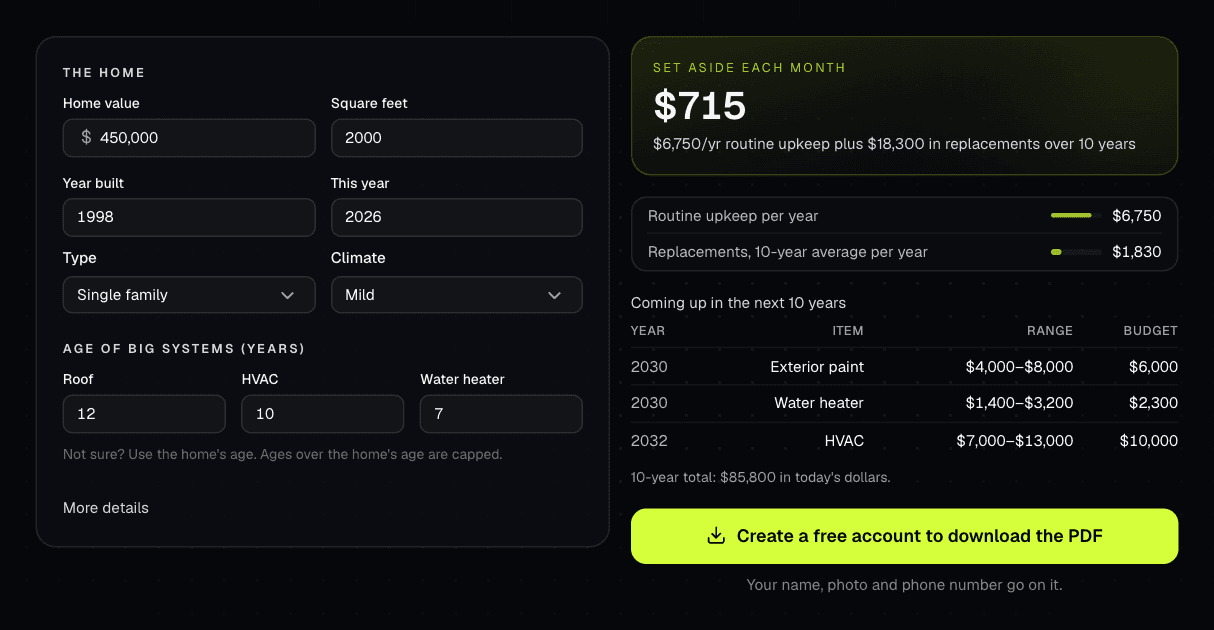
If you go several months without an issue, leave the funds untouched. That reserve will pay for the next water heater or roof repair without creating stress. You can use our maintenance cost tool to estimate what your specific home might cost to maintain each year.