How to winterize your home before the first freeze
A plain checklist to protect your pipes, heating system, and roof from freezing weather before winter arrives.
Cold weather puts heavy stress on a house. Water inside pipes can freeze and burst the plumbing, drafts make rooms chilly, and heating systems run for hours at a time. Taking care of a few simple tasks before the first freeze where you live protects your home and keeps your utility bills steady.
Clear outdoor water lines
Water expands when it freezes, which can split pipes and fittings wide open. Start outside before the temperature drops below freezing.
- Disconnect all garden hoses from outdoor faucets, drain them, and store them indoors.
- Shut off the indoor water valve for exterior spigots if your home has one, then open the spigot outside so remaining water drains out.
- Install insulated foam faucet covers over outdoor hose bibbs to protect them from cold winds.
- Turn off the water supply to your in-ground sprinkler system.
Plastic irrigation pipes and valves crack easily if water sits in them over the winter. Call a licensed irrigation professional to blow out the sprinkler lines with compressed air before the ground freezes.
Clean gutters and downspouts
Dead leaves and twigs fill gutters fast during the fall. When wet leaves block the flow of rain and melting snow, water pools along the edge of your roof. This standing water freezes into thick ice dams that can push up under your shingles and leak into your ceilings.
Clear all gutters by hand and flush the downspouts with water so they drain freely. Make sure your downspout extensions carry runoff several feet away from the foundation walls. If your roof is steep or your gutters are high, hire a licensed pro to clean them safely.
Inspect your heating system
A furnace that quits during a cold snap puts your pipes at risk. Replace your furnace filter before turning the heat on for the season. A clogged filter blocks air, strains the blower fan, and wastes energy. Check the filter monthly through the cold season and swap it when it looks gray.
Hire a licensed heating technician to clean and service your furnace or boiler. They can test the safety shutoffs, check the heat exchanger for dangerous cracks, and inspect the exhaust flue. If you have a wood-burning fireplace, have a chimney sweep inspect the flue and remove built-up creosote before lighting your first fire.
Seal drafts and test detectors
Cold air leaks in through tiny gaps around windows and doors, making your heating system run longer than necessary. Walk through each room on a windy day and feel for drafts around frames and baseboards.
- Replace brittle weatherstripping along exterior door frames.
- Install a door sweep along the bottom of doors if you can see daylight under the threshold.
- Apply exterior caulk around window trim where old sealant has cracked or pulled away.
Heating equipment and closed windows increase fire and air quality risks during the winter. Test every smoke alarm and carbon monoxide detector in the house. Put fresh batteries in each unit, and check the manufacture date stamped on the back to make sure the alarms have not expired.
Steps if you leave the house empty
Leaving a home unoccupied during cold weather requires extra care. Never turn your thermostat off when you leave for winter trips. Keep the temperature set high enough so wall cavities with plumbing do not freeze.
Open the vanity and sink cabinet doors in bathrooms and kitchens so warm air circulates around the supply lines. If you plan to be away for weeks, turn off the main water shutoff valve inside the home and open the taps to drain the lines. Ask a neighbor to check inside the home regularly to catch any heating or water problems early.
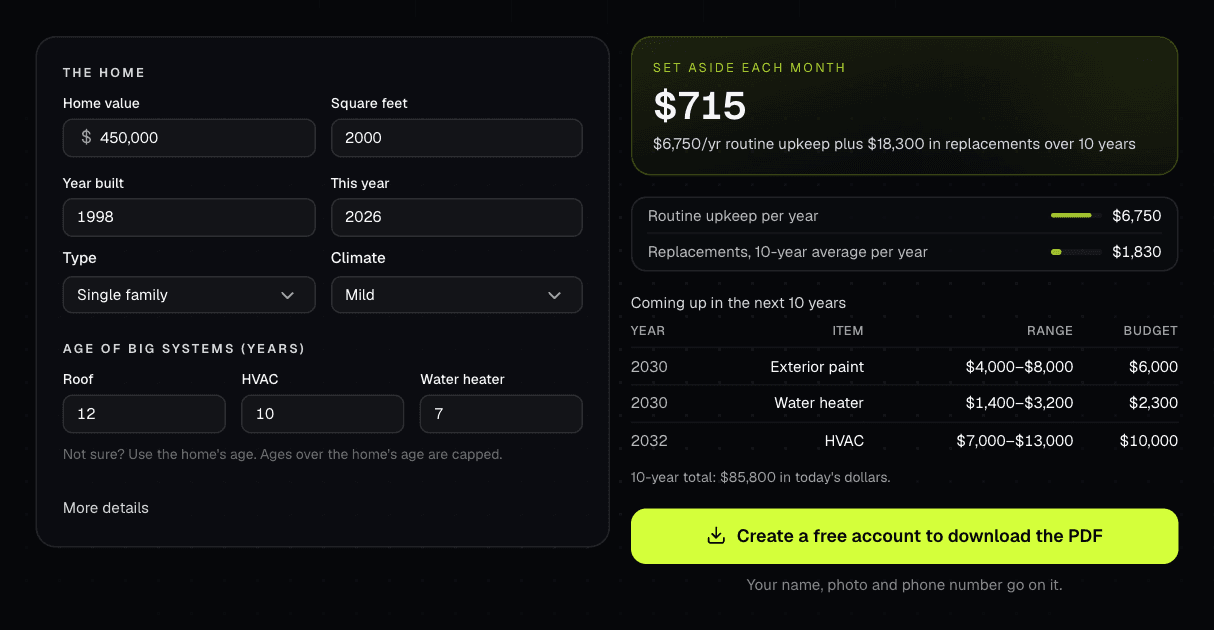
Planning for seasonal upkeep keeps small chores from turning into expensive emergency repairs. Use our Maintenance Cost tool to see what a home costs to maintain each year so you can set aside funds for seasonal prep.