How long major home systems last and signs of wear
Learn typical lifespans for your roof, furnace, air conditioner, and water heater, plus the warning signs that tell you replacement is coming.
Every part of a house has a shelf life. Some parts last for decades, while others wear out much sooner. Knowing the age and typical lifespan of your home's main equipment helps you avoid surprise breakdowns.
Regular care can help equipment reach the upper end of its expected life, but time and weather eventually catch up with everything.
Lifespans of major home systems
Most primary systems last within these broad ranges under normal use and steady care:
- Roof: Standard asphalt shingle roofs generally last between twenty and thirty years. Metal or tile roofs often last much longer.
- Furnace: A standard forced-air furnace usually runs well for fifteen to twenty years.
- Central air conditioner: An outdoor AC condenser typically lasts ten to fifteen years, depending heavily on the climate where you live.
- Water heater: A traditional tank water heater usually lasts eight to twelve years. Tankless units can last slightly longer.
- Kitchen and laundry appliances: Refrigerators, stoves, dishwashers, washing machines, and dryers tend to run for ten to fifteen years.
Roof warning signs
A roof protects the entire structure below it. Catching trouble early keeps water from reaching drywall, insulation, and framing.
Watch from the ground for missing, cracked, or curling shingles. Granules washing out of downspouts into gutters signal that asphalt shingles are wearing thin. Inside your attic, look for dark spots on roof sheathing, pinpricks of daylight, or musty smells after heavy rain. If you spot roof damage, call a licensed roofing pro for an inspection rather than climbing up yourself.
Furnace and air conditioner warning signs
Heating and cooling gear tends to give subtle hints before it quits completely.
Uneven temperatures between rooms can point to aging ductwork or a blower motor losing power. Strange noises like squealing, banging, or rumbling often mean internal parts are loose or worn out. If your equipment turns on and off rapidly without reaching the set temperature, the internal controls may be failing.
Always call a licensed HVAC technician for repairs or maintenance on gas lines, burners, or electrical connections.
Water heater warning signs
Water heaters often fail without much warning, which can lead to messy leaks.
Check around the base of the tank every few months for damp spots or pooling water. Rusty, discolored hot water coming from your faucets suggests the interior lining of the tank has started to corrode. Rumbling or popping sounds happen when sediment builds up at the bottom of the tank and bakes into a hard crust. If you notice leaks around gas connections, turn off the supply and call a licensed plumber right away.
Major appliance warning signs
Kitchen and laundry appliances make life easy, but their motors, pumps, and seals break down over time.
Refrigerators that run continuously or fail to keep milk cold are nearing the end of their run. Dishwashers that leave standing water in the bottom or fail to dissolve soap tabs often have worn-out pumps. Washing machines that shake violently or leak around the door seal may need replacement rather than another repair.
Why tracking system ages matters
When you know how old each system is, you can prepare for large replacements before an emergency happens. A failed furnace in freezing weather leaves you rushing to hire the first available contractor. Planning ahead lets you research options, compare bids, and schedule work on your own timeline.
To find out the age of your equipment, check the metal manufacturer label on the side of each unit. Many labels list the manufacture date directly. If yours only shows a serial number, a quick search of the brand and serial number pattern will tell you the month and year it was built.
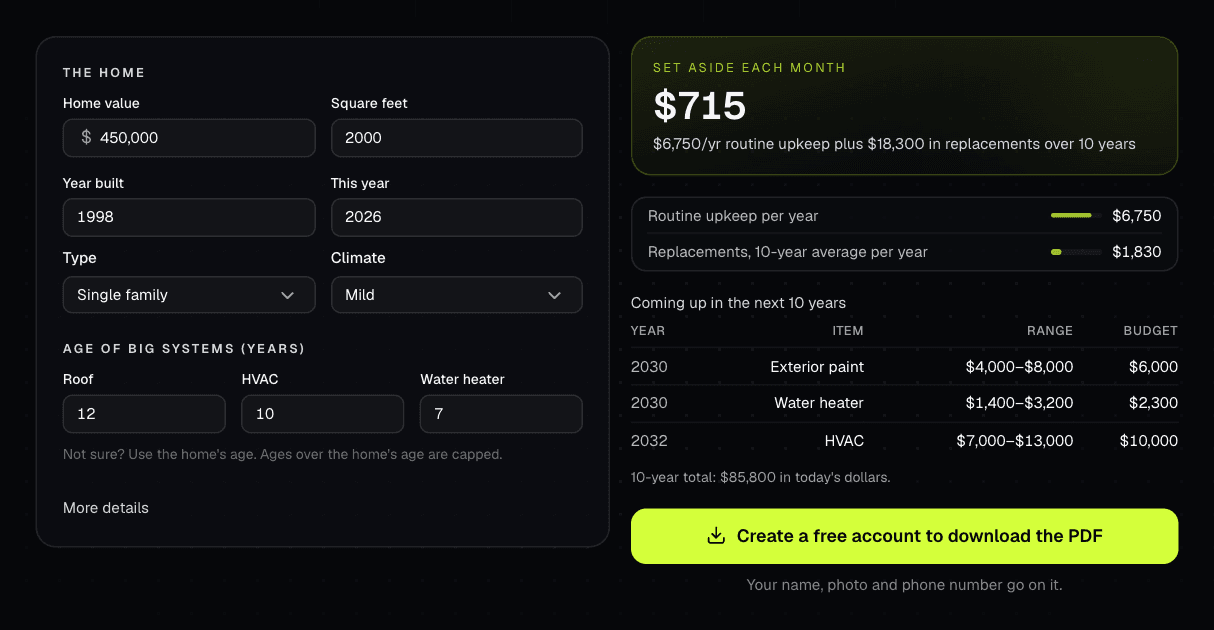
Use our Maintenance Cost tool to plan ahead for routine upkeep and future replacements for your home.